A makeup bag reset can help Pakistani readers prepare for a busy workweek or wedding by checking what is already there. A nearly full foundation or an expensive mascara is not automatically worth keeping. Check the product’s instructions, history, and condition before deciding whether to use it again.
This guide uses the US Food and Drug Administration and the American Academy of Dermatology for general safety and brush-care information. It does not describe Pakistani labelling law, test products or recommend a particular cosmetics brand. References were checked on 24 November 2026.
Start your makeup bag reset checklist.
Empty the bag onto a clean surface. Separate products from applicators and wipe the bag according to its care instructions. Keep packaging and purchase details where they help identify a product. Avoid opening several replacements simply to compare them; leave a backup sealed until you need it.
FDA explains that shelf life depends on the product, how it is used and how it is stored. Moisture, repeated contact, and temperature changes can affect it. That is why one expiry timetable for every lipstick, foundation and eye product is unreliable.
| What you find | Practical next step |
|---|---|
| Readable expiry or after-opening instructions | Follow them and record the opening date. Ask the manufacturer if the instructions are unclear. |
| A changed smell, colour or unexpected texture | Stop using it; do not try to disguise the change by mixing in another product. |
| An old product with no reliable opening history | Set it aside and ask the manufacturer. Do not invent an opening date. |
| Unlabelled decanted makeup | Find the original product details before deciding whether it belongs in your routine. |
Give eye makeup its own check.
FDA advises against adding water or saliva to mascara and says to discard eye makeup if you develop an eye infection. Do not share makeup. Cleaning a brush does not make an old or potentially contaminated cosmetic safe again.
Keep a simple opening-date note on your phone or a small sticker on the container. Record the product name, the date you opened it, and the manufacturer’s stated use period or expiry. For example, “opened 24 November 2026” is useful information; “bought sometime last winter” is not a reliable substitute. This log is a planning tool, not a safety guarantee.
Clean makeup brushes every 7–10 days
The American Academy of Dermatology recommends washing makeup brushes every 7–10 days. Its method is straightforward: rinse the bristle tips under lukewarm running water, avoiding soaking the whole brush head. Swirl the tips in a bowl of lukewarm water with a tablespoon of gentle or clarifying shampoo, then rinse.
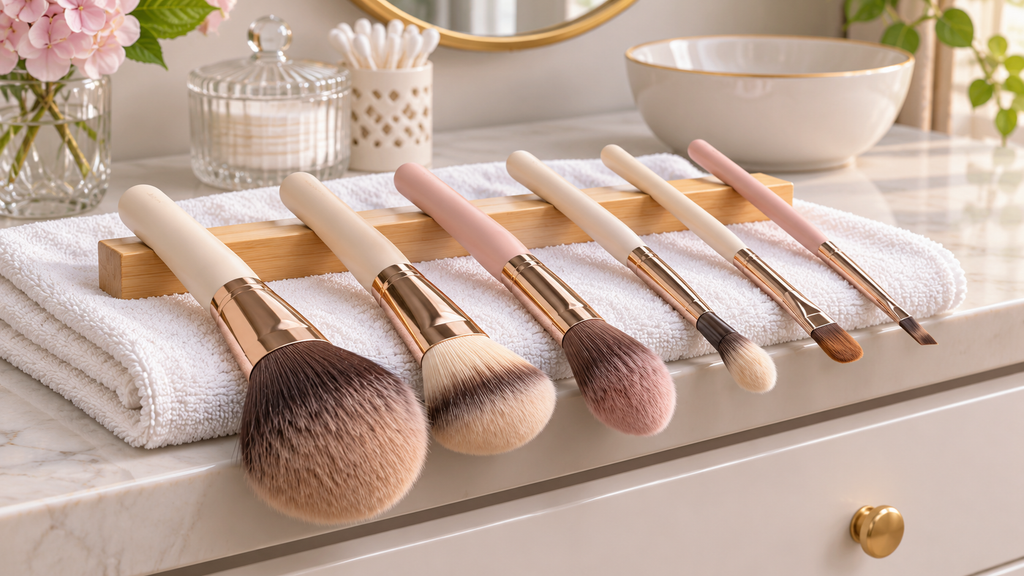
Repeat until the water runs clear. Squeeze out excess moisture with a clean, dry paper towel. Lay brushes flat on a towel with their tips extending beyond the counter edge; do not stand wet brushes upright. Let them dry before putting them back into the bag. Follow the applicator maker’s separate instructions for sponges or specialist tools.
Make storage fit your daily routine.
FDA recommends clean, tightly closed containers protected from temperature extremes. In practice, choose a dry drawer away from direct sun instead of leaving the kit in a car or beside a steamy shower. Wash your hands before applying products and close each container after use.
For a shared hostel room or family dressing table, keep personal products and brushes in a separate pouch. For a salon appointment, ask how tools are cleaned and request a fresh disposable applicator where appropriate. These are practical questions, not proof that any particular salon is safe or unsafe.
Replace a need, not the whole collection
Editorial suggestion: Make a short list with three columns: keep, replace, and do not rebuy. If you only use one lip colour for office days, you may not need several open alternatives. For wedding preparation, include necessary replacements in your existing spending plan; our wedding guest budget guide can help keep beauty purchases within the full event budget.
Repeat the check when you pack for travel or open a new product. Good record-keeping reduces guesswork, while label directions and product condition remain the deciding checks.
Primary references
FDA: shelf life and expiration dating of cosmetics: https://www.fda.gov/cosmetics/cosmetics-labeling/shelf-life-and-expiration-dating-cosmetics
FDA: using cosmetics safely: https://www.fda.gov/cosmetics/resources-consumers-cosmetics/using-cosmetics-safely
American Academy of Dermatology: how to clean makeup brushes: https://www.aad.org/public/everyday-care/skin-care-secrets/routine/clean-your-makeup-brushes