School lunchbox planning in Pakistan should start with the school timetable. A meal packed before the van arrives may wait several hours before break. Choose the food and the way it will be kept together, then build a small routine the family can repeat.
The plan below uses familiar household foods and a worked school-morning example. It is an editorial planning aid, not a prescribed diet or a guarantee that a particular container will keep food safe. Adjust foods, textures and portions for the child’s age, allergies and individual needs.
School lunchbox planning in Pakistan starts with break time
Ask when the child eats, where the bag stays, and whether there is reliable refrigerator access. Check the school’s allergy rules. Test whether the child can open the container, close it again, and manage the spoon without help. A short practice lunch at home can reveal a lid that is too stiff or a portion that is awkward to carry.
For a worked example, a Rawalpindi family packs at 6:45 am and the school break starts at 10:30 am. That is three hours and 45 minutes. A chicken sandwich left without temperature control for that whole period would exceed USDA’s two-hour room-temperature guidance. Cold morning weather alone does not establish the temperature inside a bag.
Choose a cold, hot, or shelf-stable route.
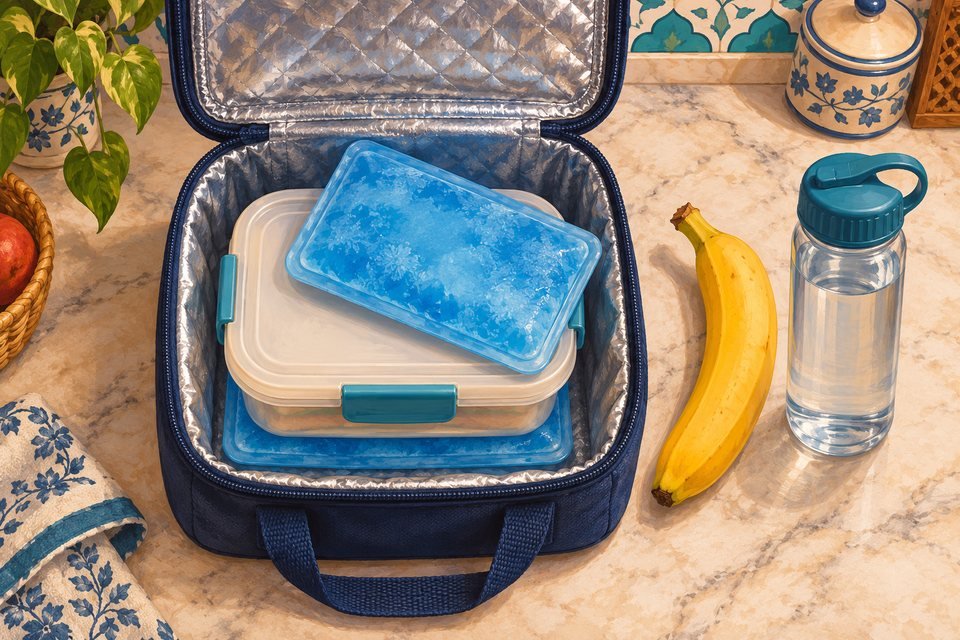
USDA advises an insulated lunch bag with at least two cold sources around perishable foods. Keep cold food below 40°F, about 4.4°C. For hot meals, use a suitable insulated food container, preheat it with boiling water, empty it, add hot food, and keep it closed. Hot food should stay at or above 140°F, or 60°C. Adults should handle the boiling water.
| Route | Possible household example | Packing decision |
|---|---|---|
| Cold | Egg sandwich with a separate fruit portion. | Chill the perishable food first; use two cold sources and an insulated bag. |
| Hot | A suitable cooked meal in a food flask, with roti separately. | Use a container capable of keeping the food hot until break. |
| No cold or hot holding available | Whole fruit, plain bread or crackers, and an unopened shelf-stable item. | Choose items labelled for ambient storage; follow opening instructions. |
USDA’s standing rule is to avoid leaving perishable food at room temperature for more than two hours, reduced to one hour above 90°F, about 32.2°C. Time outside temperature control adds up. An ordinary plastic box or an insulated bag without an effective cold source does not prove that the meal stayed cold.
Use a small repeatable menu, not a complicated calendar
Start with two lunches the child already accepts. For example, keep one cold sandwich option and one suitable hot-flask option, then vary the accompanying fruit. If neither temperature route is dependable that morning, use foods that genuinely do not require refrigeration. Do not quietly treat cooked rice, egg, or meat as shelf-stable.
Choose the next day’s lunch before the evening kitchen cleanup. Put the clean, dry container and spoon together, freeze the cold packs, and reserve the ingredients. For shopping quantities, use our weekly grocery planning guide so that lunch ingredients fit into the household list.
Separate the night-before job from the morning job
- The evening before: agree the food, check the school timetable and prepare clean equipment. Keep perishable ingredients refrigerated.
- Before departure: wash hands, pack the selected temperature-control system and add drinking water. Keep raw meat away from ready-to-eat ingredients during preparation.
- After school: empty the bag, review what came back, and clean the equipment before the next use.
SafeFood recommends washing and drying lunchboxes daily and cleaning water bottles after each use, including the mouthpiece. Let bottles dry completely before storage. Discard uneaten food that spoils quickly at the end of the day; do not use smell as evidence that hours of uncontrolled storage were safe.
Review what worked without making lunch a battle.
Ask one concrete question: was the problem the taste, the lid, the time available, or the amount? Change one thing for the next lunch. Keep notes for a few school days before buying a larger box or a new set of containers. The aim is a manageable meal and a dependable packing routine, using equipment that suits the actual school day.
Sources and verification
Checked on 22 November 2026. Food-safety guidance is standing advice, not a new Pakistan regulation. Celsius figures are conversions from the USDA values. Timings, meal combinations and routines are editorial examples. No lunch bag or food flask was temperature-tested, and no calorie or medical nutrition targets are claimed.
USDA school-lunch food-safety guidance, 5 August 2025: https://content.govdelivery.com/accounts/USDAOC/bulletins/3ebbb1b
USDA two-hour rule: https://ask.fsis.usda.gov/article/What-is-the-2-Hour-Rule-with-leaving-food-out
SafeFood lunchbox and water-bottle guidance: https://www.safefood.net/food-safety/lunchboxes