A seasonal wardrobe swap in Pakistan does not have to start with buying boxes. First, decide which clothes you need within reach, which can move out of daily storage, and which need attention before they go anywhere.
A household in Rawalpindi may move warmer layers into everyday use, while someone in Karachi may keep more light outfits accessible. Use your actual routine and travel plans rather than one packing date for the whole country.
Plan a seasonal wardrobe swap in Pakistan by access
Work on one shelf or one person’s clothes at a time. This keeps the bed usable and avoids turning a small room into a full-day sorting project. Use a temporary basket for anything whose destination is not decided.
| Group | Example | Next action |
|---|---|---|
| Use regularly | Work clothes, school clothes, comfortable everyday outfits | Keep in the easiest space to reach |
| Keep accessible occasionally | A light suit for a warm day or planned trip | Use one small accessible section |
| Store for later | Outfits unlikely to be worn this season | Check, clean as required, and pack |
| Needs a decision | Missing button, poor fit or an item nobody uses | Repair, alter, donate if suitable or recycle appropriately |
Do not put damaged clothing into the seasonal box with a plan to remember it later. Keep a repair note outside storage, and choose a realistic time to deal with it.
Check the garment before choosing the cleaning method
Follow each garment’s label. GINETEX explains care symbols for washing, bleaching, drying, ironing and professional care. A cotton-looking outfit can include trim, print or mixed fibres that change the treatment it can tolerate.
Check pockets, visible stains, loose hooks and zips. Keep items needing specialist care separate from ordinary washable clothing. Do not apply one strong cleaning treatment to every fabric simply because the clothes are being stored.
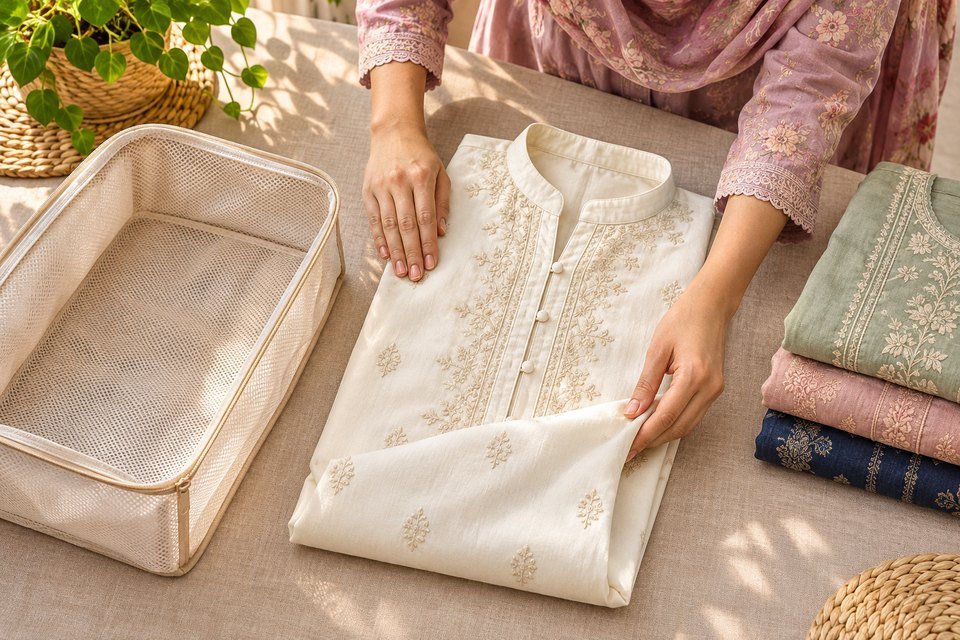
Choose the storage place before buying the container
Measure the shelf opening, depth, and usable height. Leave room to lift a bag or box out without pulling everything above it down. For a shared almari, give each person a labelled section instead of mixing all the household’s summer clothes.
Worked example: A shelf is 70 cm wide, 40 cm deep and 35 cm high. Two proposed boxes measuring 34 × 38 × 28 cm would nominally fit side by side, leaving 2 cm in total width. Handles, lids and the door opening could still prevent removal, so measure the real outside dimensions before purchasing.
These measurements are an example, not a recommended product size. If a clean bag you already own fits and protects the clothing appropriately, use it before buying another organiser.
Match the packing method to the garment.
For wool clothing, Woolmark’s storage guidance explains that vacuum packing saves space but is unsuitable for some delicate items and can trap moisture. It identifies breathable cloth bags as an option for delicate garments. That is not a rule that every textile must use the same container.
Pack only fully dry items. Keep heavy pieces from pressing on fragile decoration. Follow specialist advice for valuable embroidered outfits, leather, or other garments whose care needs are uncertain.
If clothing is still damp after washing, finish drying it before packing. Our indoor winter laundry guide covers that separate step.
Deal with damp instead of covering the smell.
The EPA’s moisture guidance stresses that controlling moisture is central to preventing indoor mould. If a cupboard wall is damp or a storage area repeatedly smells musty, investigate the water or moisture source rather than relying on perfume or a new bag.
- Label each container with its contents and packing date.
- Keep frequently needed outfits outside the deep-storage group.
- Inspect stored items periodically and after leaks or damp conditions.
- Do not add more items than the container can hold without forcing its closure.
- Reassess unused clothes at the next swap instead of automatically storing them again.
Editorial suggestion: Judge the result by how easily you can find and return an outfit. A smaller, usable arrangement is more helpful than a perfectly packed cupboard that nobody can maintain.