Checked: 24 November 2026, Pakistan. Pakistan’s first astronaut flight moved closer on Tuesday as Muhammad Zeeshan Ali was named to the Shenzhou-24 crew. China’s space agency scheduled the launch for 25 November 2026 at 8:18 am Beijing time — 5:18 am Pakistan Standard Time. This is a pre-launch report, not confirmation of liftoff or arrival.
Pakistan’s first astronaut: what has been confirmed?
The China Manned Space Agency’s 24 November briefing names Tang Hongbo as commander, Wu Yi as flight engineer, and Ali as payload specialist. The launch is planned from Jiuquan. Ali is set to become the first foreign astronaut to visit China’s Tiangong space station.
Radio Pakistan separately reported the planned Wednesday journey and Ali’s preflight appearance with his Chinese colleagues. It described the training he received in China and his emphasis on peaceful cooperation. Those remarks describe preparation and ambition; they do not establish that the spacecraft is already in orbit.
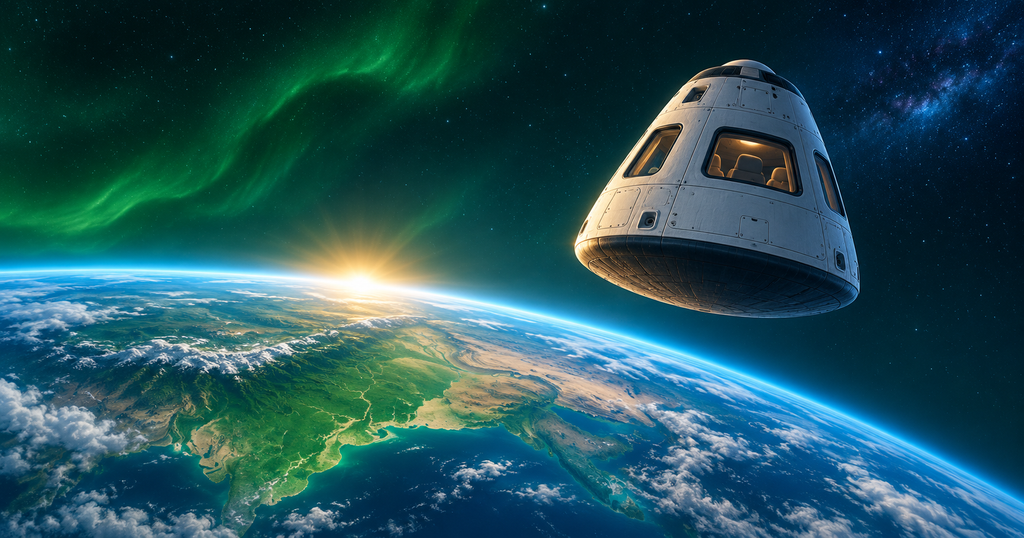
The mission plan at a glance
| Item | Plan announced on 24 November |
|---|---|
| Launch target | 25 November, 5:18 am Pakistan time; subject to mission updates. |
| Ali’s role | Payload specialist working on joint China-Pakistan space experiments. |
| Return plan | A short visit, followed by return aboard Shenzhou-23. |
| Status at this check | Crew and launch schedule announced; launch and docking not yet verified. |
CMSA says Ali’s work will include installing experiment samples and units and carrying out planned research. His return on a different spacecraft is part of the announced mission design. The launch date should not be read as the return date.
Why the announcement matters in Pakistan
President Asif Ali Zardari welcomed Pakistan’s participation in a statement carried by APP on 24 November. He connected the opportunity with scientific research, learning and innovation, and wished the astronauts a successful mission and safe return.
Editorial analysis: The useful distinction is between a national milestone and the research behind it. A Pakistani crew member working on experiments offers a concrete science story for classrooms. The value of individual experiments will need to be assessed from their methods and published results, rather than from the launch announcement alone.
What readers should watch next?
Launch, orbital insertion, docking, and return are separate events. Check a dated official update before sharing a claim that any one of them has happened. For a school discussion, ask students to record the planned time, the confirmed event, and the source of confirmation in separate columns.
This report will need a status check after the scheduled launch. Follow our News coverage for other Pakistan-relevant developments.
Sources
Primary mission briefing, CMSA, 24 November 2026; Chinese-language source: https://www.cmse.gov.cn/xwzx/202611/t20261124_57876.html
Pakistan Broadcasting Corporation, 24 November 2026: https://radio.gov.pk/24-11-2026/pakistans-first-astronaut-to-embark-on-space-journey-tomorrow
APP report of the President Secretariat statement, 24 November 2026: https://www.app.com.pk/national/president-congratulates-nation-on-pakistans-participation-in-historic-space-journey-to-tiangong-station/